
You must have an order with a minimum of $500.00 to place your order, your current order total is $0.00.
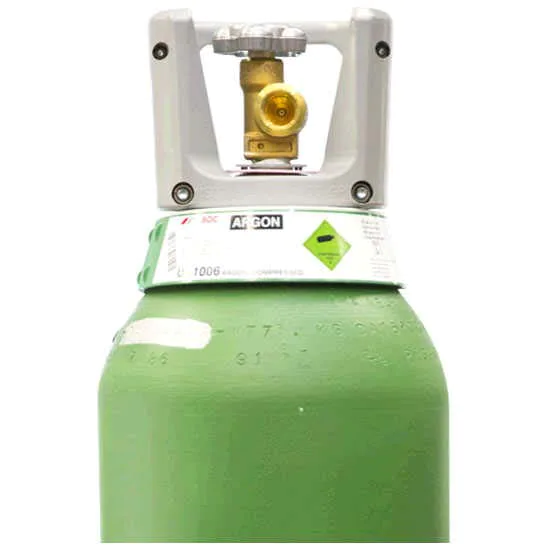
Price range: $542.95 through $729.36
Key Features:
Cylinder Type: Standard cylinder
Gas Type: Speciality gas
Gas Component: Argon
Valve Type: BS3
Cylinder Pressure Options: 200 Bar
Cylinder Material: Steel Cylinder
Cylinder Size Options: Multiple cylinder size options available
Supply Mode: Cylinders
Refrigerants – What They Are
A refrigerant is the fluid that makes cooling possible in air conditioners, heat pumps, and refrigerators. It works by cycling between liquid and gas, absorbing and releasing heat.
Why they matter:
- Some refrigerants harm the ozone layer (CFCs, HCFCs).
- Others contribute to climate change (HFCs).
- Newer refrigerants with low global warming potential (GWP) are becoming the standard.
Pure Argon Cylinders – Gas Grades
Pure gases are classified by grade. The grade tells you how pure the gas is:
| Grade | Minimum Purity | Total Impurities |
|---|---|---|
| N2.0 | 99% | 1% |
| N3.0 | 99.9% | 1000 ppm |
| N4.0 | 99.99% | 100 vpm |
| N5.0 | 99.999% | 10 vpm |
| N6.0 | 99.9999% | 1 vpm |
| N7.0 | 99.99999% | 100 vpb |
👉 Example: N4.6 helium = 99.996% purity.
👉 Buy Pure Argon Cylinders Online – available in multiple grades.
Why Refrigerants Are Regulated
Refrigerants can be dangerous because they involve:
- High pressure (up to 1,000 kPa / 150 psi)
- Extreme temperatures (−50 °C to +100 °C)
- Flammability (classified A1, A2/A2L, A3)
- Toxicity (classified B1, B2, B3)
Therefore, only certified engineers should handle them. In the UK, for example:
- C&G 2079 covers A1‑class refrigerants.
- C&G 6187‑2 covers A2/A2L and A3 refrigerants.
Low‑GWP Refrigerants – The Future
With stricter climate rules, low‑impact refrigerants are gaining ground:
- R‑290 (Propane): Efficient, zero ozone depletion, but flammable.
- R‑600a (Isobutane): Widely used in domestic fridges.
- R‑717 (Ammonia): Efficient but toxic; used in industrial cooling.
- R‑1234yf (HFO): Less flammable, adopted in cars.
- R‑744 (CO₂): Non‑toxic, non‑flammable, now used in supermarkets and heat pumps.
Commonly Used Refrigerants Today
- R‑32: Substitute for R‑134a and R‑410a, but still high GWP.
- R‑134a: Widely used in automotive AC and heat pumps.
- R‑410a: Dominant in split AC systems.
Banned or Phased Out
- R‑11 (CFC‑11): Banned in 1996.
- R‑12 (CFC‑12 / Freon): Banned globally by 2010.
- R‑22 (HCFC‑22): Being phased out.
- R‑123 (HCFC‑123): US phase‑out by 2030.
Refrigerant Reclamation and Disposal
When cooling systems are serviced, refrigerant gas can escape. To prevent harm:
- Technicians must be certified.
- In the US, the Clean Air Act makes it illegal to release refrigerants into the atmosphere (except propane, isobutane, ammonia, and CO₂).
- Used refrigerants must be reclaimed by EPA‑licensed facilities.
👉 Argon Cylinders Near Me – available with compliance to international standards.
| Cylinder Size | V (2.11m3), L (10.57m3) |
|---|
Be the first to review “Argon Cylinders N5.5 (Research Grade Ar)”
Related products

Nitrogen Gas
Price range: $213.17 through $432.64
This product has multiple variants. The options may be chosen on the product page
Price range: $139.19 through $210.59
This product has multiple variants. The options may be chosen on the product page
Nitrogen Gas
Price range: $403.57 through $524.16
This product has multiple variants. The options may be chosen on the product page
Price range: $36.66 through $114.59
This product has multiple variants. The options may be chosen on the product page
Nitrogen Gas
Price range: $33.59 through $47.99
This product has multiple variants. The options may be chosen on the product page
Reviews
There are no reviews yet.