
You must have an order with a minimum of $500.00 to place your order, your current order total is $0.00.
$110.64
Key Features
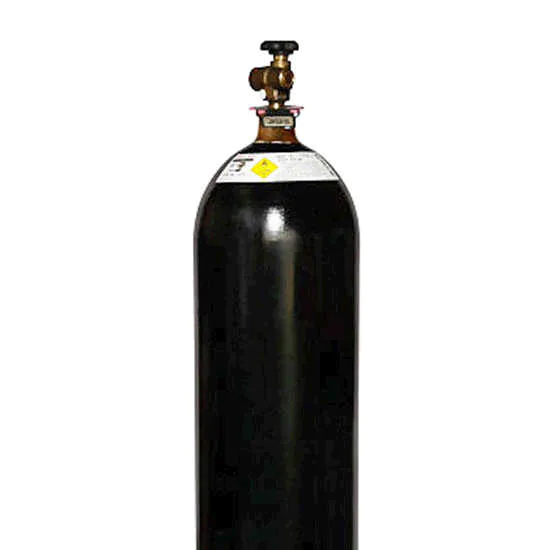
Supply Mode: Cylinders
Cylinder Type: Standard cylinder
Gas Type: Welding gas
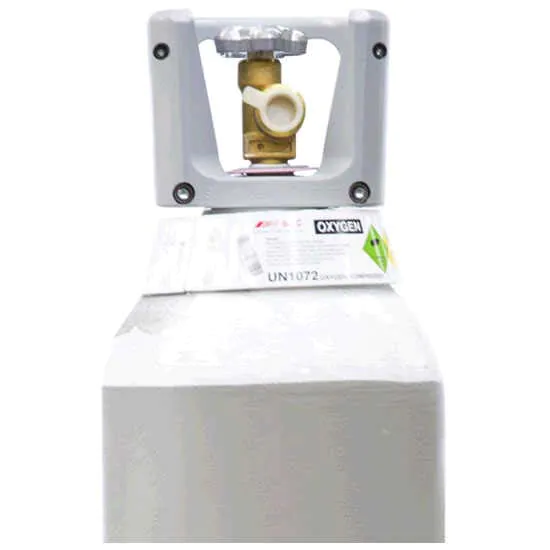
Gas Component: Oxygen
Cylinder Size: N (9.92m3)
Refrigerant Gas Distributor: Refrigerant Gas Suppliers™’s high purity oxygen is a colourless and odourless gas. Many materials burn in oxygen that do not normally burn in air. Reduces the flash-point temperature and increases the combustion speed. Can be used as an assist gas for laser cutting.
Refrigerant Gas Distributor: Refrigerant Gas Suppliers™ does not approve the use of industrial or special gas-grade oxygen for medical use. These High Purity Oxygen are filled to different standards and should not be inhaled or used for medical purposes. Medical oxygen is a licensed medical gas and, as such, can only be supplied to approved healthcare professionals for clinical use. Should you require medical oxygen for personal use, this needs to be via a prescription from your GP, which will be fulfilled via your regional supplier.
Product name: Oxygen, compressed
Other Name: Oxygen (Special Gases), Oxygen (and High Purity Oxygen)
Additional identification
Chemical name: Oxygen
Chemical formula: O2
INDEX No. 008-001-00-8
CAS-No. 7782-44-7
EC No. 231-956-9
REACH Registration No. Listed in Annex IV/V of Regulation (EC) No 1907/2006 (REACH),
exempted from registration.
Chemical name Oxygen
INDEX No.: 008-001-00-8
CAS-No.: 7782-44-7
EC No.: 231-956-9
REACH Registration No.: Listed in Annex IV/V of Regulation (EC) No 1907/2006 (REACH), exempted from
registration.
Purity: 100%
The purity of the substance in this section is used for classification only and does
not represent the actual purity of the substance as supplied, for which other
documentation should be consulted.
Here’s your text corrected into a cleaner, active‑voice version with better flow and readability. I’ve kept the meaning intact but reduced passive constructions and added transition words:
High Purity Oxygen Precautions for safe handling
Only experienced and properly instructed persons should handle gases under pressure. Always use equipment that is specified for this product and rated for its supply pressure and temperature. Keep all fittings free from oil and grease, and apply only oxygen‑approved lubricants and sealants.
Open the valve slowly to avoid pressure shock, and close it after each use. Report damaged valves immediately to the supplier. In addition, never attempt to repair or modify container valves or safety relief devices.
Protect containers from physical damage. Do not drag, roll, slide, or drop them. Instead, move cylinders with appropriate equipment such as a trolley, hand truck, or fork truck. Always secure cylinders in an upright position and provide adequate ventilation.
Prevent suckback of water, acids, or alkalis, and avoid backfeed into the container. Store cylinders below 50°C in a well‑ventilated place. Furthermore, observe all local, regional, national, and international regulations regarding storage.
Do not eat, drink, or smoke while using gases. Never use direct flame or electrical heating devices to raise container pressure. Leave valve protection caps in place until the container has been secured against a wall, bench, or stand and is ready for use.
Replace valve outlet caps or plugs as soon as the container is disconnected from equipment. Keep valve outlets clean and free from contaminants, particularly oil and water. If you experience difficulty operating a valve, stop immediately and contact the supplier.
Finally, never attempt to transfer gases from one container to another. Always keep valve guards or caps in place to ensure maximum safety
Be the first to review “High Purity Oxygen Cylinder”
Related products
Oxygen
Price range: $108.48 through $137.24
This product has multiple variants. The options may be chosen on the product page
Price range: $10.26 through $43.06
This product has multiple variants. The options may be chosen on the product page
Price range: $896.03 through $1,262.05
This product has multiple variants. The options may be chosen on the product page
Price range: $22.79 through $42.59
This product has multiple variants. The options may be chosen on the product page
Reviews
There are no reviews yet.